


Our APBC SI J and spinal course is currently 2 x 5 day programs. It’s strongly advised to study both parts to be a effective & safe practitioner.


Q. How long is the training ?
Our APBC pelvic girdle and full spinal course currently consists of 2 x 5 day programs (10 days total). It is strongly advised to study both parts to become an effective and safe practitioner.
Nevertheless, you can still study just 5 days of APBC Level 1 and then return to study part 2 at your convenience. Additionally, we offer APBC part 3 Sports Extremity Manipulation Diploma, which is a 5-day course covering upper and lower extremity subluxations.
Click Here For Sports Extremity Diploma

Q. Is the course practical ?
A. Our manual therapy program, APBC Technique, taught in this program is 90% hands-on. This is a technique workshop, so prior knowledge of surface anatomy, anatomy, physiology, pathology, and differential diagnosis is required for entrance.
Q. Who can apply?
A. You need to be a physiotherapist, osteopath, chiropractor, medical doctor, nurse with massage therapy training, or sports therapist with a degree to apply for this postgraduate course.
Q. Can I attend APBC Level 2 for complicated SIJ and disc pathologies without attending APBC Level 1?
A. No. You must take APBC Level 1 to progress to APBC Level 2.
APBC Technique Part 2 covers complicated pelvic issues and various disc pathologies. This course is a masterful guide by Dr. Robbie, studying physiotherapy, osteopathy, and chiropractic with 33 years of experience, fast- tracking you to clinical excellence.
Click Here for APBC level 2 and our complicated SI J and Disc pathology course.

Post-nominal letters following practical course & examinations: Grad Cert Man Ther (APBC Technique)

Q. Who are the teachers ?

A. Founder APBC Technique
Dr Robbie Goodrum PhD D.O COC DPT DBM ND
UK trained physiotherapist & Osteopath

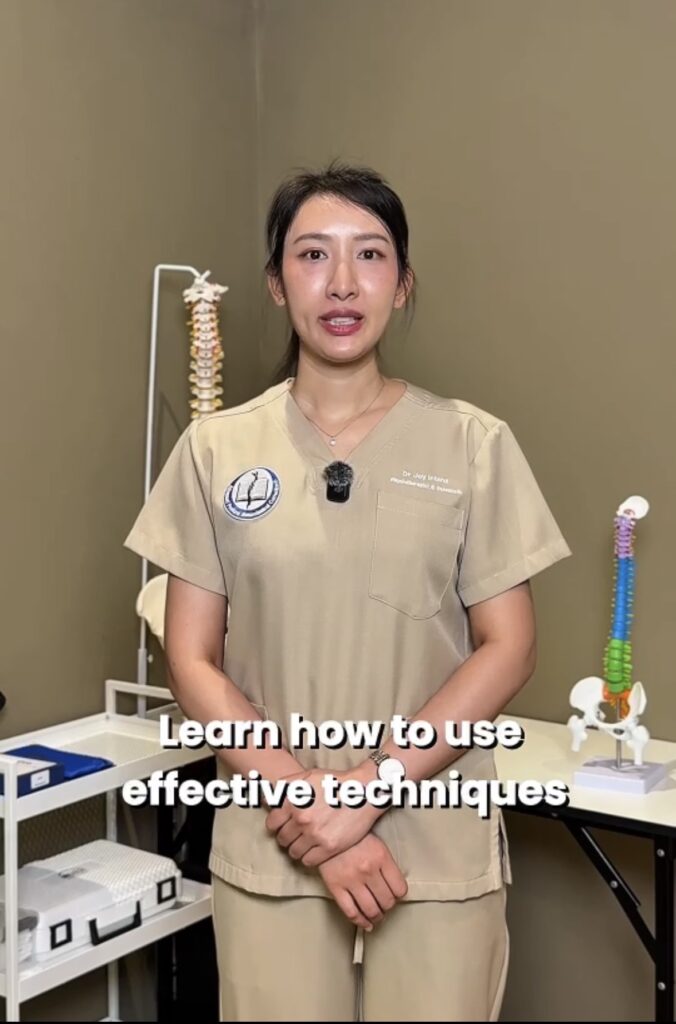
A. Dr Joy Intana PhD, DO, DPT, BSc PT, APBC, Grad Dip Man Ther
Head APBC Instructor (Global)
Video Dr Joy talking to Dr Robbie
Q. Is there an exam?
A. Yes – APBC Advanced Postural Biomechanical Correction (Part 1) Graduate Certificate in Manipulative Therapy requires a 30-minute theory exam and 15-minute practical exam to pass our APBC Level 1.
An APBC Certificate of Attendance in APBC Part 1 will be awarded to everyone if the participant chooses not to take the short test.

Post nominal letters following practical course & examinations: Grad Cert Man There (APBC Technique)
Q. Is APBC Technique the same as Chiropractic or Osteopathy?
A. No. APBC is an independent technique in its own right. APBC technique has its roots and inspiration from Chiropractic and Osteopathy, but it’s now a totally different philosophy, assessment, and technique with 100% of Dr. Robbie’s own safe, unique philosophy, assessment, and techniques.

Q. Is the training a copy of osteopathy & chiropractic ?
A. No. The Program Details:
Our training programs are unique and combine the best, safest short-lever techniques inspired by Chiropractic and Osteopathic methods, but it’s different, safer, and improved, and very modified to the point APBC Technique is completely different to osteopathy and chiropractic after 33 years of modifications in assessment, technique, and philosophy. APBC technique is unique. Now we have our own unique APBC Technique, assessment, manipulative, mobilization, soft tissue, fascia release, nerve stretching technique, and rehab developed by Dr. Robbie Goodrum and Dr. Joy Intana.
Q. What will you learn?
A. APBC Part 1 The certificate course will include safe HVT short-lever manipulation with 60% less rotation, mobilization, APBC modifications of Osteopathic articulation method, APBC modifications of Osteopathic soft tissue technique for the full spine and pelvis using only the best technique, plus a focus on APBC Technique. In this course, there is no extremity or specific disc manipulation.
Our training is focused on Dr.Robbie’s APBC Technique to make it safer for practitioner’s ergonomics and to reduce micro-trauma for the patient whilst remaining an effective technique based on Dr.Goodrum’s 15-year PhD research on excessive manipulation causing instability.
Q. What do you learn?
– History & Philosophy of APBC Technique, Osteopathy & Chiropractic. Techniques of above & how this reflects their philosophy & assessment methods.
– Understanding of subluxation & degeneration chiropractic model of thinking.
– Practical Lab is 90% of our program (It’s a technique workshop).
– Orthopaedic examination for pelvic coccyx Cervical, thoracic & lumbar Disc, facet, including differential diagnosis for TOS, Carpal tunnel syndrome, pronator teres syndrome.
– Upper and lower neurological exam.
– Orthopaedic examination of entire spine.
– George’s test Vascular VBI discussion.
– A variety of APBC soft tissue & dynamic mobilizations for the lumbar thoracic, cervical to assess somatic dysfunction (stiffness) and treat myofascia/capsule facet restrictions.
– APBC cervical soft tissue technique.
– Supine APBC short-lever HVT manipulation for the spine facet joints from C7-C3, upper Cervical OA, AA joints C1 & C2.
Technique video APBC Technique 1
Click here to find out the different in a “real subluxation” & minor misalignments ?
Chiropractic short-lever Atlas lateral break (diversified technique). This is a heavy HVT from the chiropractic profession; we don’t teach this in APBC Technique anymore as it’s potentially dangerous to the vertebral artery, causing stroke and death. APBC technique has better, gentle, and 100% safe methods.

APBC Technique Grade 5 HVT techniques are taught in depth on each level of the spine: C7-C3, OA and AA joints, C2 and C1.
APBC difference is we use 60% less rotation in these manipulations. Plus we have non-HVT ways to align the cervical spine without cracking or overstretching ligaments.
APBC mobilization Technique for Occiput subluxation Rotation (Posterior Right, anterior Left)

APBC Adjuster Instrument Technique for Occiput subluxation – Rotation (Posterior Right, anterior Left)

APBC Technique for Inferior Occiput subluxation (Inferior Left)

APBC adjuster Instrument Technique for safe C1 subluxations – lateral Left

APBC HVT Technique for C1 subluxation lateral left (uppermost)

APBC Technique for C3 subluxation PL process left (Note nose in midline and rotation used reduced by 60%)

APBC adjuster Instrument Technique for T7 subluxation – PR – (process right) associated with posterior Rib subluxation on same level


APBC adjuster Instrument Technique for T7 subluxation – PL( process left) + associated with posterior Rib subluxation on same level


APBC HVT for T7 subluxation – PL process left (butterfly technique) associated with posterior Rib subluxation on same level.

APBC mobilization or HVT Technique for T7 subluxation – PL process left

APBC Technique for Global twisted rib cage subluxation a unique APBC assessment and technique.

APBC adjuster instrument technique for Base Anterior / Sacrum subluxation (Couter-nutation)

APBC wheel Technique for IN internal and EX external Ilium (Left EX, Right IN Subluxation)

Q. Why do we not teach Osteopathic long-lever HVT manipulation?
A. lumbar roll and osteopathic manipulation generally use too much torsion/rotation, which can further traumatize the annulus fibrosis of the disc and capsular structures.
An example is a modern osteopathic lumbar roll; nevertheless, it’s still a bad technique for disc problems.

We have much better APBC short-lever lumbar and pelvic techniques compared to osteopathy & chiropractic.
(APBC Techniques are safer for the operator and patient.)
Seen as below Ilio-sacral manipulation PI Push Antertiorising the ilia on sacrum a chiropractic technique we don’t teach anymore as it can cause ligament damage or instability if used too much.

APBC Sacral Rotation subluxation Push Involved Side Up

APBC Push L1-5 PL process left subluxations Mammillary Push technique

Above ☝
All the above chiropractic techniques use excessive forces that cause micro-trauma to the operator over years and can cause instability in patients if overused.
Q. What happens in the next 3 days?
A. APBC techniques taught include APBC short-lever manipulation for the pelvis, ilium, sacrum, coccyx, and pubic joint, lumbar, thoracic, and cervical spine, including the upper cervical spine, Atlas, Axis (C1/C2), and TMJ. We also teach an APBC technique for a globally twisted rib-cage, which maintains a pelvic imbalance (our original technique). This course teaches a modified short- lever APBC assessment and manipulation technique. We also introduce the APBC drop table technique and a hand-held manipulation instrument, an Adjusting Instrument called an “Adjuster Pro”. Note the APBC drop table technique may only be taught if the country hosting the course has a drop table.
This course will teach the full spine and Pelvis. The techniques taught in this program are 90% hands-on.
Note: Our APBC training is inspired by Chiropractic & Osteopathic, but our training is a unique adaptation by Dr Robbie’s 33 years experience, We focus on APBC Advanced Postural Biomechanical Correction technique not chiropractic or osteopathy. We are not modified osteopathy or chiropractic!
We have Testimonials from DO’s & DC’s Click Here

Dr Robbie, Dr Joy and our team of 6 global APBC teachers teach Dr Robbie’s APBC technique that was developed over 33 years.
Click Here for a Video Testimonial
Click Here Study APBC Technique onsite click here for seminar dates
Click Here Study a degree in Osteopathy Online
Program


Course dates Booking form testimonials
CLICK HERE for more details of Graduate Certificate in Manipulative Therapy APBC part 1
Our Mission…
Our mission is to help the professional practitioner perfect their diagnostic and manipulating skills, to enable him or her offer the best to their patients.